Channel Trajectory: Internal communications channel mapping

Map your internal communications channels, audiences, and reach – and produce an internal communications channel matrix: Effective internal communications that truly engage and inspire require deep knowledge of what audiences need. All too often though, employee communications channels overlap and the message gets lost as the employee is bombarded with content from all sides.

We've created a detailed process for a communications audit that systematically maps internal audiences and formal and informal digital communications channels. We produce a detailed internal communications channel matrix – a rich map of your channel landscape that defines audiences, reach, impact, and criticality. It forms the basis for your internal communications strategy, governance, and measurement plans.

Understanding internal channels

When messages come from every direction, employees get overwhelmed and clarity and engagement suffer. Internal communicators face the challenge of untangling who’s saying what, where, and how. Setting clear boundaries and guidance shouldn't be guesswork.

This is what we do

We've carried out hundreds of user and stakeholder interviews with some of the world's largest companies about their digital communications channels. Drawing on our experience of mapping digital workplaces and bringing governance to complex landscapes, we've created a detailed methodology to reveal insights across your channel landscape, giving you the depth of understanding you need to get your channel mix back under control.

How it works

Channel Trajectory is a detailed channel and audience mapping methodology that results in a rich definition of your communications landscape – including a detailed internal communications channel matrix. We look at the entirety of your digital and in-person internal communications channels. We work collaboratively with you throughout the project and everything is delivered remotely to anywhere in the world. When you engage us we:

  1. Hold a kick off workshop to confirm scope and understand your communications landscape.
  2. Carry out multiple user and stakeholder interviews, with a cross section of your workforce.
  3. Review existing documentation and samples of communications channels.
  4. Analyse all our data, deriving meaningful insights and recommendations that we report back to you.
  5. Produce detailed audience and channel definitions packed with additional information on reach, impact and criticality – delivered as an internal communications channel matrix ready to underpin your strategy and governance.
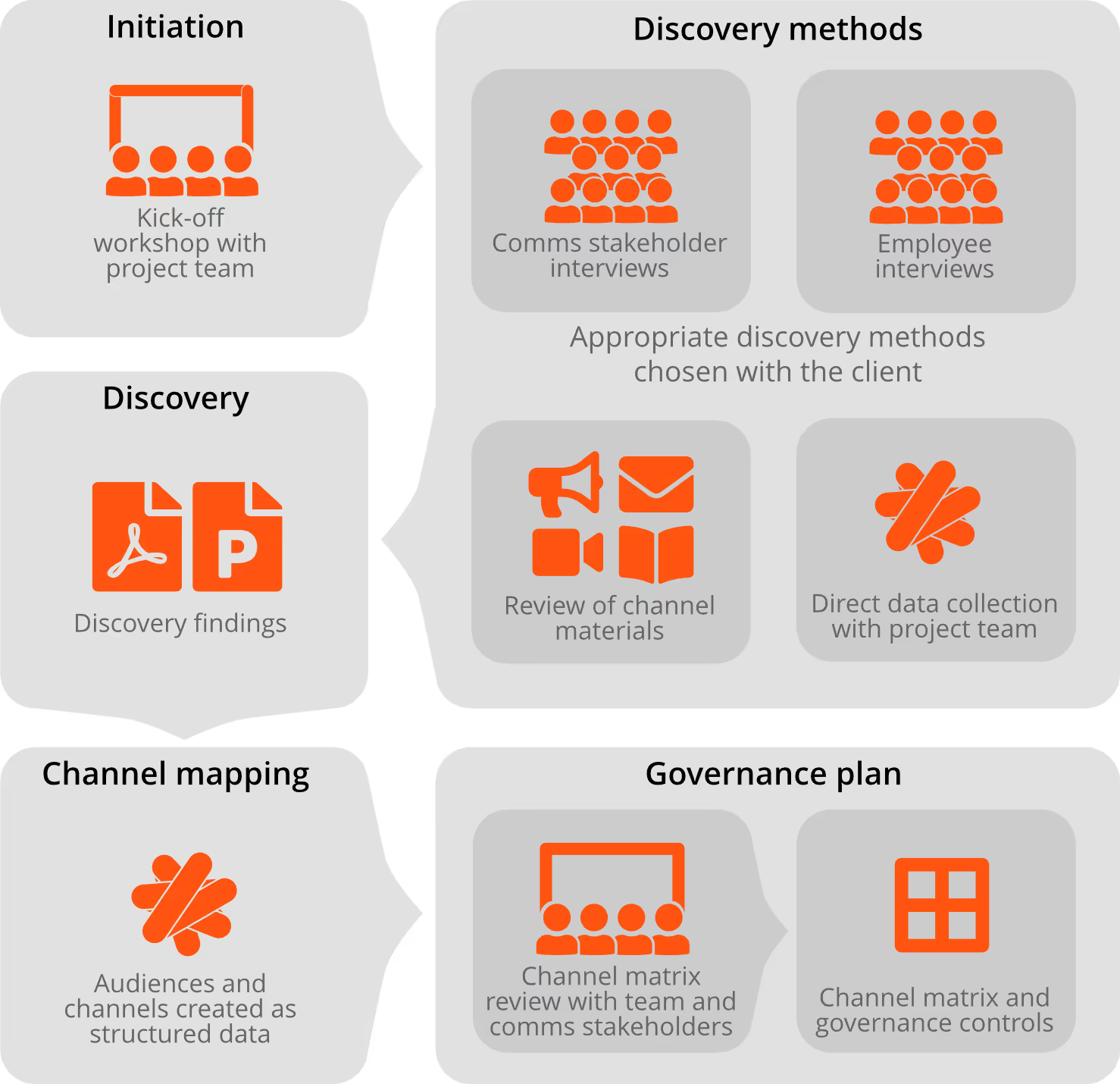
Flow diagram showing the delivery stages of a consulting project for communication channel mapping and governance.
	1.	Initiation – Kick-off workshop with the project team.
	2.	Discovery – Document and present discovery findings.
	3.	Discovery methods – Methods agreed with the client, including:
	•	Communications stakeholder interviews
	•	Employee interviews
	•	Review of channel materials
	•	Direct data collection with the project team
	4.	Channel mapping – Create structured data of audiences and channels.
	5.	Governance plan – Review the channel matrix with the team and stakeholders, and define governance controls.

Icons in orange illustrate each activity, with grey boxes grouping related tasks.

Channel mapping explained

What is channel mapping?
Channel mapping is the process of identifying, documenting, and defining the internal communications channels an organisation uses — who owns them, who they reach, how they overlap, and how effective they are. It gives communicators an authoritative picture of the landscape before setting strategy or governance.

What is the channel mapping process?
The Channel Trajectory process involves a kick-off workshop, stakeholder and user interviews, a review of existing channels and documentation, and a detailed analysis phase. The output is a set of audience definitions and a channel matrix covering reach, impact, and criticality ratings across your entire communications landscape.

Why is channel mapping important?
Without a clear map of your communications channels, it's impossible to know whether the right messages are reaching the right people, where channels overlap and create noise, or where gaps exist. A channel matrix gives you the evidence base to rationalise, govern, and improve your communications — and to make the case for change internally.

Governance resources

Explore practical resources to help you implement effective intranet governance

Free guide

How to create an Internal Communications Channel Matrix with governance that works

Get sparks in your inbox

We like to share our experience and models with practical examples and ideas that you can use in your day to day work.  Get our low-volume, high-quality newsletter. Interesting, useful and engaging. We promise.

We’ll only use your email for this newsletter. No spam, no sharing. We use MailerLite, and your data is stored securely in the EU. You can find everything openly in our privacy policy and you can unsubscribe at any time.

Let's transform your digital channels

Talk to industry experts Steve or Chris for a no-nonsense take on your digital communications challenges. No outsourcing. No juniors.

Book a chat. Never the hard sell.

book a 30m meeting

Some of our recent articles

The AI revelation: We need to govern meaning as well as IT tools with Provenance

We propose "Provenance": a cross-functional stewardship role governing organisational meaning and authoritative content so AI-driven tools and agents remain coherent, safe, and auditable.

April 9, 2026
Reworked
Chris Tubb

The AI epiphany: It's a content problem hiding in plain sight

AI failures often stem from poor content, not models. How can content governance, authoritative sources and task anchoring make AI retrieval trustworthy?

April 1, 2026
Reworked
Chris Tubb

The rules, regulations and roles of AI governance and why it's not enough

Enterprise AI governance often overlooks information quality. Aspects of provenance such content authority, coherence and lifecycle has to be governed too.

March 31, 2026
LinkedIn
Chris Tubb

The AI Heresy: Realizing Content Is the Critical Lever to Success

When enterprise AI fails, it fails confidently. Part one of three on why your content estate is the biggest risk in your AI rollout.

March 25, 2026
Reworked
Chris Tubb

The AI Epiphanies, Part Three: Mapping and managing the epistemic landscape

Mapping employee task journeys will manage epistemic risk: we're turning employee journey mapping into an essential risk management technique for the AI era.

February 10, 2026
LinkedIn
Chris Tubb

The AI Epiphanies, Part Two: How Provenance restores order to a fractured digital workplace

Provenance: a coordination layer ensuring authoritative, explainable AI-driven workplace information—aligning content, agents and governance to reduce misinformation risk.

February 3, 2026
LinkedIn
Chris Tubb

The AI Epiphanies, Part One: Seeing the Hidden Landscape Beneath Enterprise AI

Enterprise AI needs "Provenance": a discipline to make content AI‑legible, prevent misinformation, and govern publishing boundaries for trustworthy synthesis.

January 27, 2026
LinkedIn
Chris Tubb

The AI Heresies, Part Six: Strategy and Choosing the Right Problems in the Digital Workplace

Prioritise problems over AI hype: use user-centred discovery and RICE to pick projects, strengthen governance, and prepare for the fallout if the bubble bursts

October 13, 2025
LinkedIn
Chris Tubb

The AI Heresies, Part Five: Governance Eats the Gains

AI won't fix content chaos, governance will. Define ownership, meaning, structure and attention first, otherwise increased AI output just multiplies your mess.

October 2, 2025
LinkedIn
Chris Tubb